Featured Image: Adam Hartist
The dungeon crawl. Since the earliest iteration of our hobby, going from room to room in a dungeon, fighting monsters along the way, was the core of the game. Creating elaborate maps, determining monster types that would live together, or even cause conflict on their own. If you look online for tips on dungeons in d20 fantasy, you’ll see a plethora of design tips, from “Jacquaysing a Dungeon”, to the 5-room dungeon, to random dungeon map generators for quick and easy play. Even I have an article about the order to design your dungeon. However, if you look for tips on how to run a dungeon, suddenly the advice seems to dry up.
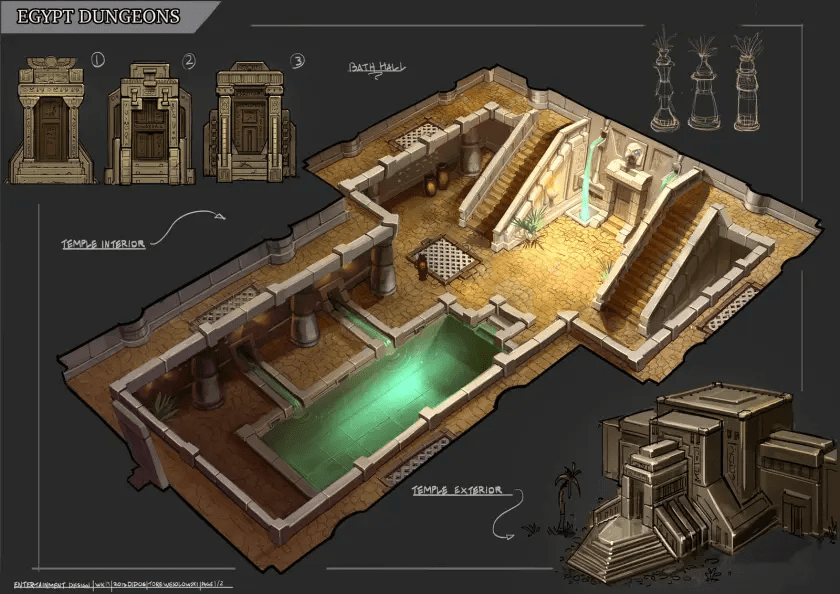
Is this because running a dungeon is the seed from which the entire game sprouted, that we then assume if you run the game in it’s simplest format, you can run a dungeon effectively? I disagree. In fact, I believe that running a dungeon deserves its own subsystem, just like you might have for long-distance travel, mass combat, or a chase scene. Dungeons, in my play experience, are abnormal to standard play, and feel awkward to run.
You enter the hallway, which has a door halfway down, and then splits left or right.
We check the door.
It’s a storage closet, of barrels and crates.
We go down and to the left.
You find yourselves on the other side of the pool of water you saw earlier…
*collective groan*
Above is a snippet of what it’s like when I run a dungeon. It’s not fun, it’s procedural, it’s confusing, it needs some help. One reason is I run most things, exploration included, as Theater of the Mind, meaning I don’t often use maps, at least not player-facing ones. Having a nice big map, or a virtual tabletop (VTT) map with fancy fog of war mechanics makes it very easy for the players to feel in control of their exploration. They see the halls and doors, they start to see how everything connects. But if they don’t have that visual aid, then it becomes clustered and confusing. So I wanted a system to help me run dungeons, in ways that doesn’t necessitate that visual aid.
Goals
Any time you want to design anything in a game, whether it’s a subsystem, a character subclass, or a monster, you first need to define what goals are you trying to accomplish, that isn’t being met by what’s already been designed.
- Avoid decisions that lack context, such as picking which hallway to go down.
- Keep critical decisions, so there is no sense of railroading through the dungeon.
- Avoid uninteresting descriptions, regardless of how realistic they are.
- Keep opportunity for discovery of secrets and hidden opportunities.
- Keep the tension of the long haul.
- Keep combats exciting.
- A system similar to my system for Mass Combat.
- A system for dungeons with more than 5 rooms, but not necessarily for Mad Mage style Mega-Dungeons.
This system reminds me of the advice to not ask for skill checks. DMs have a tendency to ask for a skill check for everything a PC wants to do. However, if the DC for a check would be below 10, don’t have them roll, just let them do it. If the story can’t continue if they fail a roll, just let them do it. If consequences for failure and/or success aren’t interesting, just let them do it. Not everything has to be mechanical, some things can just be narrative.
System
Here is an overview of what we’ll cover below. Steps 3 and 4 are the core of the system, as you’ll see below.
- Tell your Players it’s a Dungeon Crawl
- Start/Refresh your Encumbrance System
- Group rooms into Areas or Scenes, and give players all the obvious information about that area at once.
- Threats, Danger, Energy, Timers, Wonder, and Treats.
- Movement, tells players what areas they are choosing between.
- Short Rests and Rations
- Retreat and Resetting the Dungeon
- Followers
Tell Your Players
Tell your players you’re going to have a dungeon crawl. Just like saying “roll initiative” tells your players that we are going to change the rules of the game, telling your players “this is going to be a crawl” also gives them a heads up, we are changing our playstyle for the next piece of the adventure. Players always spend more time trying to understand what’s happening, instead of enjoying the ride, so just tell them what’s happening.
Encumbrance
I usually don’t play using any encumbrance system, because I find it to be tedious and boring. However, any dungeon crawl based system, like Shadowdark, or 5 Torches Deep, reinforce the fact that in a dungeon, your resources are limited. You can use whatever encumbrance system you want, but I think having one is the important part. Below is my preferred system.
Slot Based Encumbrance
This is not my original system, this is just one that I like to use for it’s ease, and rewards player choices.
Every PC has inventory space equal to 10+ their Strength score.
If you can hold and use something in 1 hand, it takes 1 slot (e.g. one-handed weapons, shields, arcane focus, etc.).
If you would hold or carry something with 2 hands, it takes 2 slots (e.g. bow, light/medium armor, two-handed weapons, etc.).
If you can hold multiple in your hand, then they all count as 1 (e.g. coins or ammunition.)
Heavy Armor costs 3 slots. If the PCs are carrying a chest, or anything like that, that can also be 3 slots, or it might be 4 split between two people. As long as you and your players agree, that’s what’s important.
One of the most important things to track is Rations, which take 1 slot each, and covers things like food and water. We’ll get into Rations more during the Rest section. You want to ensure you have Rations.
I don’t use torches right now, but that could very easily change. Especially given my new Darkvision rules.
I don’t use an Encumbered condition, I just give my players a Hard Limit. I will, however, often make exceptions for plot-required items. I don’t want to punish my players because I’m making them carry the MacGuffin of Importantness, so those things are outside the Encumbrance guidelines.
Areas
When looking at your dungeon map, with all of your notes and monsters scattered about, try to look for common themes in the rooms, and group these into areas. You can think of areas like scenes in a movie or show. What encounters and exploration is likely to take place at the same time, related to one another? That’s a scene, that’s an area. Another way to look at it, there is usually a decision to make regarding which way to go, in between the areas. If you see 3 sequential rooms, and then the hallway splits off, those 3 rooms are 1 area.
One area might be the entrance hall, which includes the stairs leading down, the guardroom at the bottom of the stairs, and the actual entrance hall itself. One area might be the prison block, which includes the poor victims being kept as prisoners that you are here to save, the storage room where all of their gear is kept, and the guards in front of them. Or the evil lieutenant’s quarters, which includes his bedroom, but also the altar that they use to worship, and the secret door that leads to the boss room.
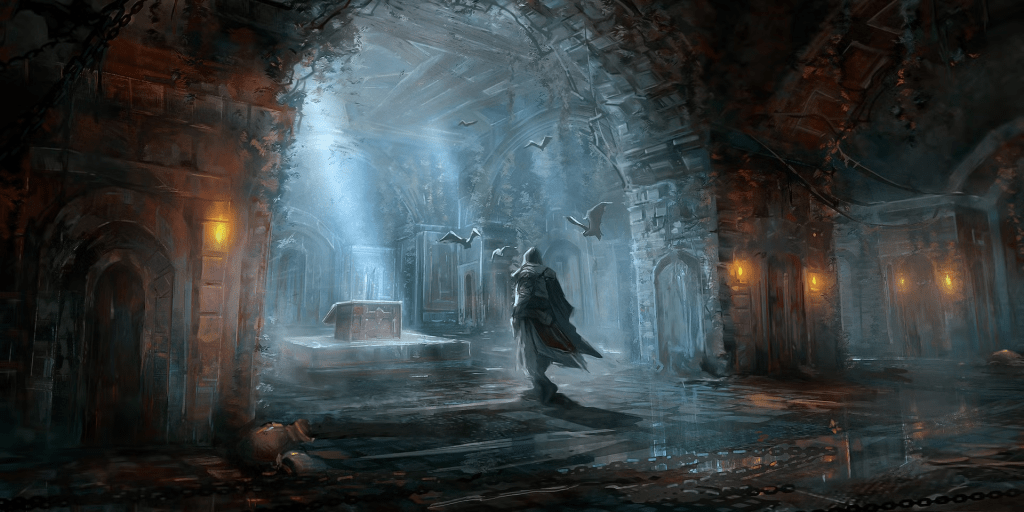
When the PCs enter an area, give them all of the available information about the rooms and hallways within that area at once, as opposed to just the singular room they are in, even if their characters technically shouldn’t know yet. For instance, let’s say in that entrance hall, they wouldn’t know there are guards at the bottom of the stairs. Let them know, tell them that this is a long hallway, leading to guards that are defending the entrance, before you get to the formal entrance hall. This allows them to make informed and interesting decisions, being active, as opposed to reactive.
If they enter a hallway full of doors, let them know that these are the guard barracks, that 3 of the 4 doors are locked, because the guards behind those doors are sleeping. This might seem like too much information, letting the players make unrealistically effective decisions. If it seems like a cakewalk, you can always put more monsters in later, make the boss stronger, etc. You have tools to make the game more dynamic, they don’t. Let them be proactive, decision makers.
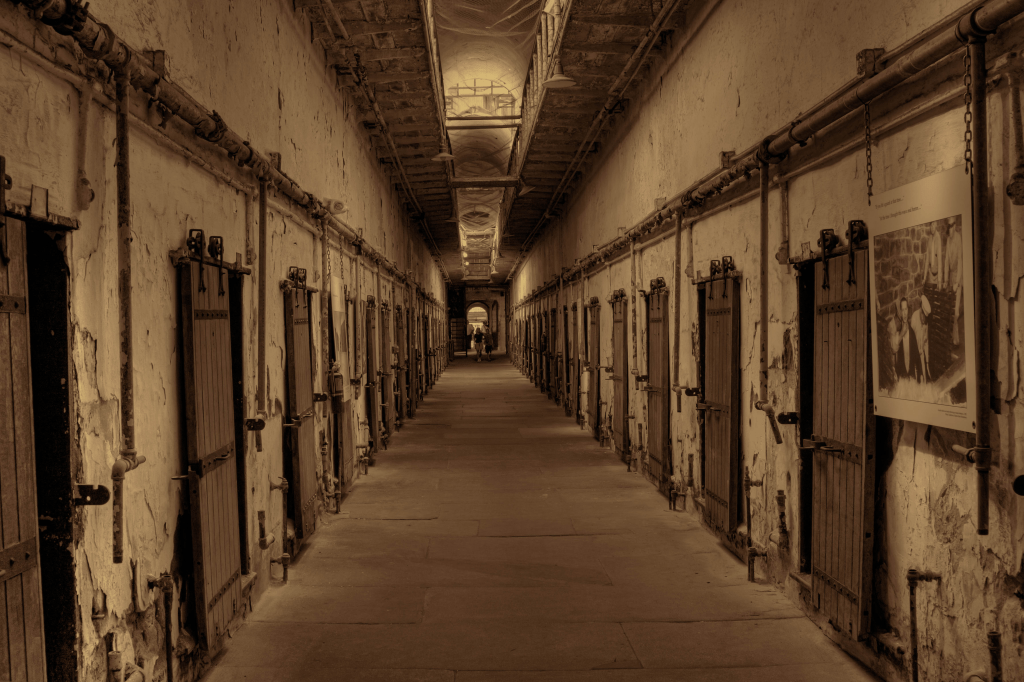
Obviously if there is a hidden chest, we won’t give that away, just after the fight give them a chance to ask questions and explore the space just like they always do, they just do it 3 rooms at a time, making the “scene” more cohesive. Scenes keep the pace moving along.
What goes in an Area
What makes an area good? How do you know you have enough in an area to make it a dramatic scene? The Index Card RPG has 6 amazing steps to Room Design. Threats, Danger, Energy, Timers, Wonder, and Treats. I’m not going to steal all of their thunder, go check them out, but here is briefly what they mean.
Threat – something that can cause damage, either a monster, trap, or other.
Danger – a consequence for failure.
Timers – Something about the area will change, usually in 1d4 turns.
Energy – In the meta, it’s your ability to keep yourself and your players engaged in the moment. If an area requires you to refer to your notes or look something up multiple times, it should be simplified, for the sake of keeping the energy going, at least until the threat is taken care of.
Wonder – Something that makes your players ask a follow up question.
Treats – An exciting answer to a follow up question.
Again, the Index Card RPG has a lot more information on these concepts on pages 90-93. Give some attention to indie fantasy RPGs, as they often have interesting opinions on how games should go. They even have a Free Quickstart pdf.
So if you’re looking at an area on your map, and aren’t sure if it’s ready for play, use this checklist.
Movement
Let’s say they cleared out the entrance hall scene, and now have a decision to make about which way to go. To the left are the guard barracks, to the right is an underground pool and a collapsed hallway, and straight ahead is a room with a puzzle. Tell them that. Tell them the names of the areas, the highlights of the areas that they are choosing between. Don’t make them go partially down each hallway, see what it is, and double back three times before they can decide. Just give them that information upfront.
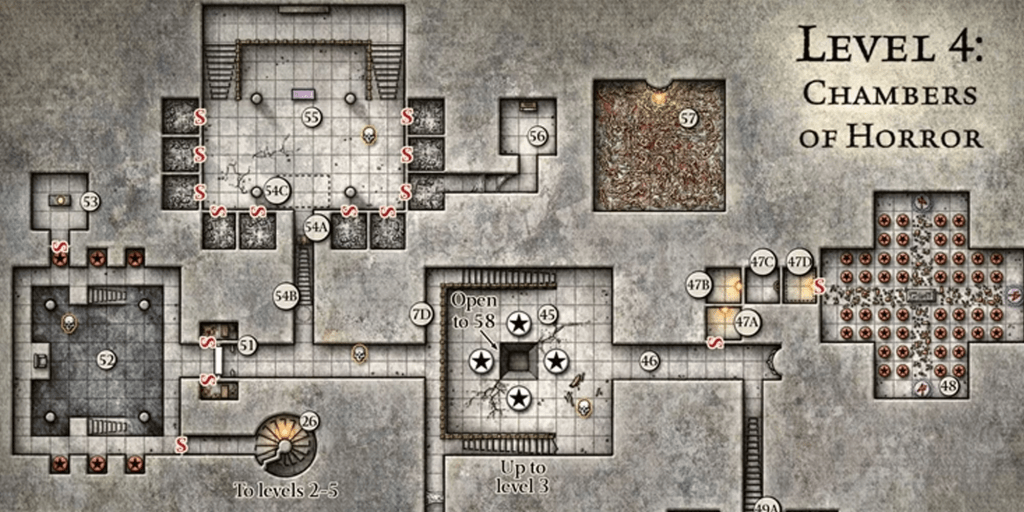
Again, we are giving them all of the agency to make the decisions that are important. All the information that they can get just by walking into a space, just give them that information before they do. You can even say “going through Option C is how you continue going through the dungeon.” If PCs want to make sure they clear out every threat first, they won’t go down this option, and they will burn more resources before they get to the boss. If PCs want to get to the end quickly, they can, and you can have the threats they skipped surprise them later. They make interesting, dramatic decisions, you can determine the consequences for those decisions.
Now, some hallways have traps that are surprises. Well, I’ve written before that no trap should be without a puzzle, and no puzzle should be without a trap in my Puzzles and Traps article. So instead of random traps in the hallways, make the Puzzle and Trap it’s own area, it’s own scene.
Some dungeons want to reward exploration of areas that are otherwise hidden.
If you can’t take me at my “you find a room of barrels and crates,” you don’t deserve me at my “you find a chest of treasure behind this secret door.”
This comes back to the idea of what kind of behavior are we supporting and rewarding in our games? I don’t want to reward rolling Perception Checks every 10 feet of the hallway in the hopes of finding a trap or a treasure. So instead I will move these into the Areas, into the scenes.
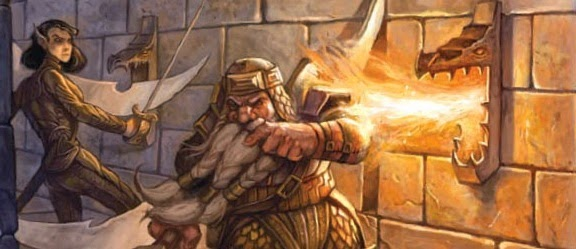
Now, some dungeons have non-threatening set dressing in their design, things that you pass by, but creative players might want to use later. During the movement from one area to another, give a CliffNotes version of what they see as they pass by.
Rest
There is no Long Rest in a dungeon. There are no beds, and safety becomes a relative concept. This isn’t to say you can’t sleep in a dungeon, but you’ll never get the benefits of a Long Rest. This makes the dungeon a more dangerous place, where you want to get in, and get out as quickly as possible. This returns the classic idea of leaving the dungeon when you’re only halfway through, because you need to heal up, even if it gives the monsters a chance to regroup.
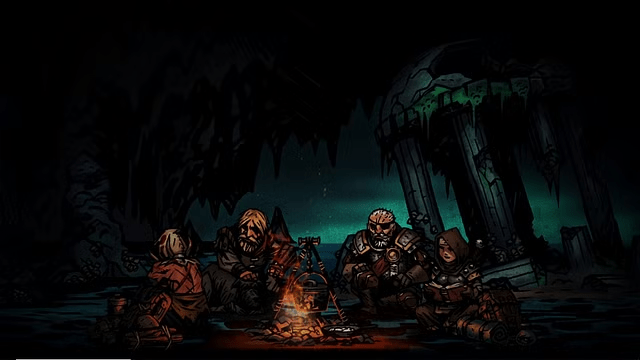
So, when you’ve cleared the threat in an area, ask the PCs if they would like to take a Short Rest. This isn’t a decision that everyone has to agree on, this is purely a mechanical choice, assuming there is no narrative reason to rush (which you might have). For me, Short Rests don’t take an hour, and there is no random encounter from taking a short rest. Only from entering a new Area.
Taking a Short Rest is how you can spend Hit Dice. In order to take a Short Rest, you must expend 1 of 2 things. Either, you spend 1 ration, meaning rations are no longer a One-a-Day resource, but the ability to use your Hit Dice. Or, you take 1 level of exhaustion, the new 2024 rules.
For each level of exhaustion, you take -2 to all d20 rolls, and lose 5 feet of movement.
With these new rules, I skip the “Level 6 exhaustion means you die” rule, because if you’re still going after losing 30 feet of movement and -12 to all d20 rolls, more power to you. So clearly rations are an important resource, potentially just as important as spell slots.
This system doesn’t track torches, because even a game called Five Torches Deep combines Rations and Torches into a single resource called Supply.
If you run out of Rations, or Spell Slots, or otherwise don’t feel you can safely finish the dungeon, then you might need to retreat back to town, as was common in old school D&D.
If you use Long Rests as an excuse for Roleplay scenes between PCs, you can still do that, just do it every few Short Rests instead. Not sure how long it’s been since they’ve slept? Neither do they! You’re underground! This also removes the need for “taking watch”, a conversation that has never seemed interesting to me.
Storage Rooms
Dungeons love to include boring rooms of storage. I see it all the time, and my players are never interested in the dry food, basic weapons, and building supplies they find in these rooms. It’s never exciting.
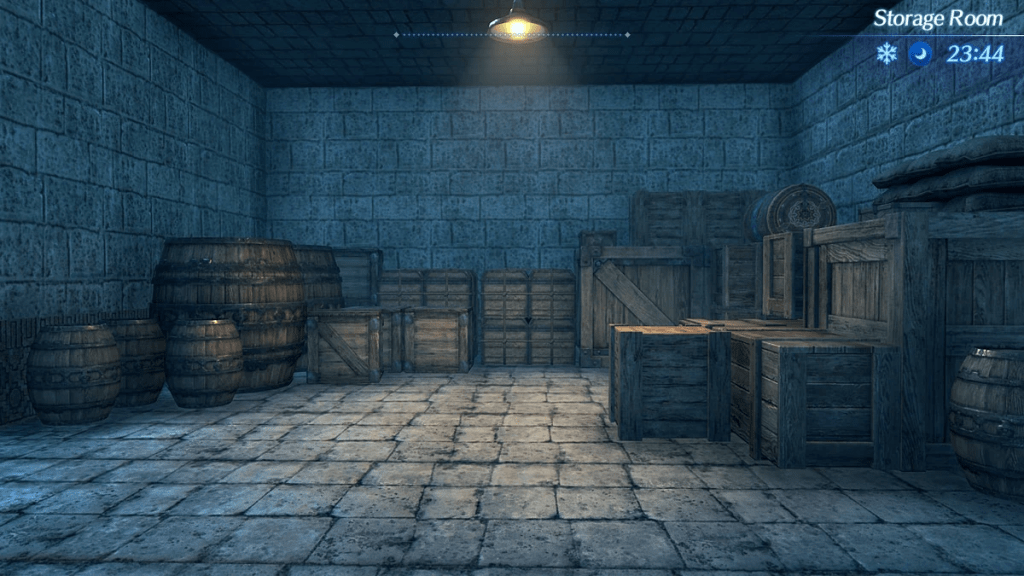
But now, now we have Rations that are very important. So, whenever you are traveling between areas, you might be lucky enough to stumble upon a storage room. If you do, then everyone is able to find an amount of Rations equal to their Survival modifier, minimum of 0. This isn’t something the players can plan on, but it can be a release valve if you think that they deserve something. We don’t want to just give them unlimited Rations, however, because we need to include the possibility of a Retreat, even for non-magic users.
Once you loot a Storage Room, it’s now empty for the remaining of the adventure. Even if only 1 person wants to loot it, if they do, it’s now empty for everyone. Encourage players to share their Rations, so they only loot storage rooms when it is most beneficial to.
Retreat
If your party does run out of rations and spell slots, and needs to retreat back to town, how much should the dungeon reset? We cleared out a lot of monsters, but the ones left will find all the dead bodies, and do something, right?
First, let them reset all of the traps. Were the players paying attention? When they return to those areas and hallways, will they remember what the puzzles were, and be ready for them?
Second, spread out the remaining monsters in ways that makes sense. Suddenly there are more rooms, so some monsters don’t have to share if they were before. Some areas still need to be guarded, but others might not anymore. Are some of them better defended? Perhaps they checked their treasure piles, and decided to armor up a bit more, or use a new weapon, now that they know they are under an active threat.
Third, add in some new low-level monsters at the front. Some creatures, like goblins or wolves might have noticed there was unoccupied space, protected from the elements. Let them move in, again if it makes sense. Does this create a new sense of conflict between the original residents and the new squatters? That can be an interesting way to show that the world doesn’t revolve around the PCs, that the villains of this adventure have more than one problem on their hands.
Followers
I love it when my players recruit NPCs to help them on their adventure. I think asking for help actually makes the PCs feel more powerful, so I encourage and support that behavior. When they do, I use the MCDM rules from Strongholds & Followers. If you aren’t familiar, followers, or Retainers, have a super simplified stat block, they don’t worry about equipment, they have their own thing going on. In this case, it’s the same thing. We don’t worry about Rations, we trust them to find their own stuff.
So that’s my current Dungeon Crawl system. The only major gap I see is the use of torches, which I still haven’t found a way to make interesting. Let me know if you see a gap in the design.
 The Nerdd