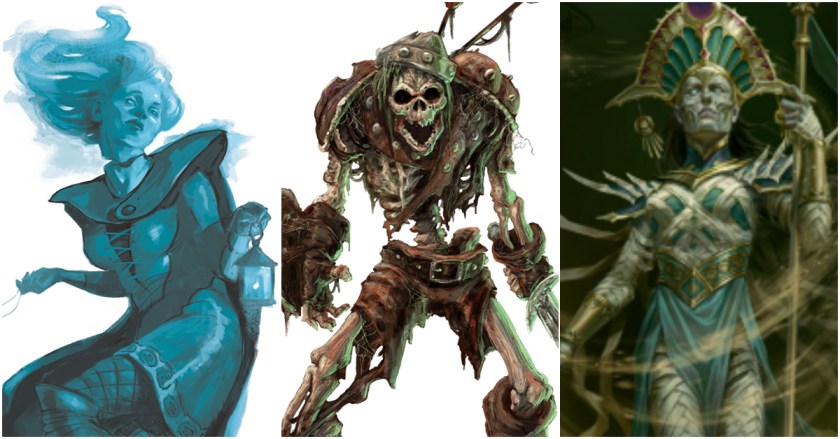
Everyone loves zombies! Fighting zombies is an iconic part of gaming of all kinds. Even Call of Duty, a series focused on the real horrors of human wars in human history, has a minigame that’s focused solely on fighting zombies.
In fantasy, specifically Dungeons & Dragons and D&D inspired modern fantasy, there are ghosts and zombies and vampires and liches. For some people, what makes an undead different from another, or what puts these different undead into the specific categories isn’t as obvious. As someone who got into fantasy via zombies, and loves monsters, I’ll simplify undead for you.
There are three kinds of undead. Incorporeal, Lesser, and Greater Undead.
Incorporeal
The first thing to know about fantasy of all kinds, is the existence of a soul. In the real world, a soul is something to be believed in, and is a central concept in most religions. The idea that who you are is not your physical being, and that your mind is where your soul resides. In almost any fantasy, your soul is who you really are.

When you die, your soul and your body become two separate things. Your body is a machine, and that machine loses it’s operator, if you will. Some who die, don’t wish to leave this earth, leave their life behind, to move on to whatever afterlife may or may not exist. They refuse to continue.
Imagine, if you will, someone comes to you and gives you two options, that you are forced beyond hope to choose between. Either, you can move far away, far from anyone or anything you’ve ever known, they don’t tell you what life is like when you will get there, or for certain if anyone else will join you. Or, if you refuse, you can sit in this little room, and the only thing in the room is a screen, and the ability to watch your friends, your family, your life, but never be able to interact with them. Sounds like the plot to an episode of Black Mirror.
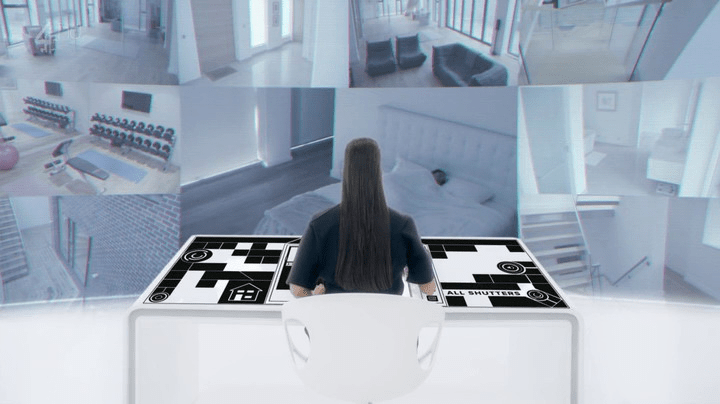
Many people that die, have something in their life that isn’t complete, something unresolved, and they are desperate to know how it will end. How long do you think you could stay in that room without going insane? Without being full of rage? I don’t believe anyone could make it a year in such a space.
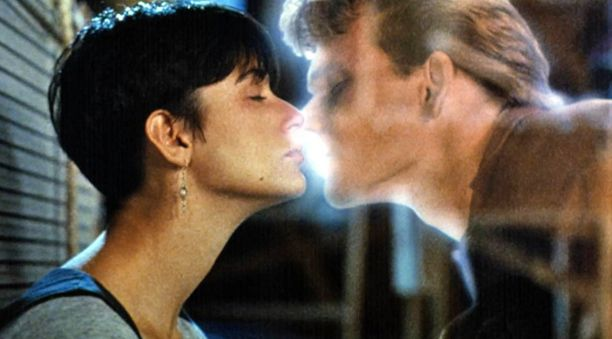
This is what a ghost is. All ghost variants fall into the category of incorporeal undead, but if you wonder why places are haunted, it comes from this rage. This rage that becomes so strong, that they are able to, only briefly, break out of that little room and touch something real.
Lesser
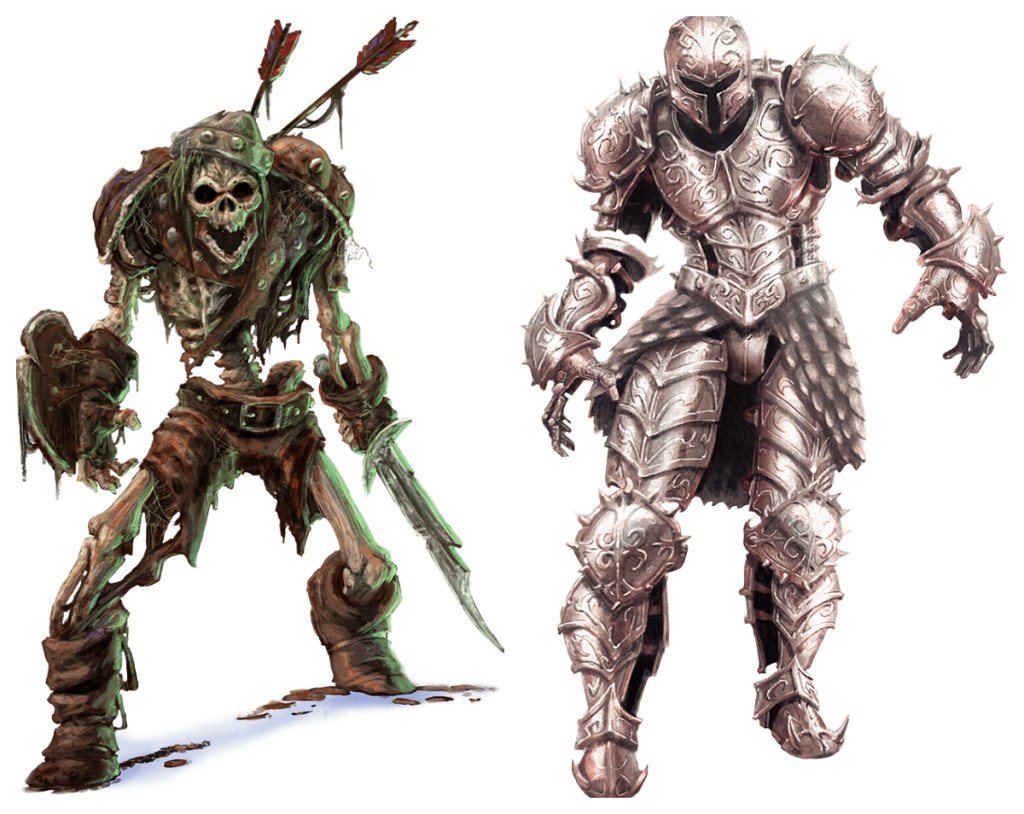
Incorporeal are the easiest undead to create, because it is usually a choice that the soul makes. Corporeal undead can only exist if something is done to them. If the body is like a shell, and the soul leaves, then it’s just an empty shell, with room to put something new in. This is where Necromancy comes in. Necromancy is the ability to create a facsimile of a soul that you can then put into a body, to drive it around.

Zombies create a lot of confusion, and this is coming from someone who is a huge fan of zombies. In science fiction, which most zombie movies fall into, zombies are the result of a virus, that kills the host body, and manipulates it. While there is overlap here, a virus is not a facsimile of life, and it’s closer to imagining a scifi zombie like a Megazord from Power Rangers, a team of smaller lifeforms work together to operate this giant machine, with the intent to infect other hosts. In fantasy, this false soul is a singular force, which is why you cannot be infected by a zombie in fantasy stories. There is no “don’t let them bite you,” there is no “you have to destroy the brain.”

In fact, incorporeal undead in fantasy are more similar to animated objects than they are to ghosts.
Frankenstein? Well Frankenstein is actually from science fiction, not fantasy. That may seem like I’m being pedantic, but science fiction doesn’t usually believe in the existence of a soul, and that the idea of a soul is actually just your brain chemistry. So if you can reanimate the brain, then the “soul” never left. If was being pedantic, I would say “Frankenstein’s Monster.” Also, Star Wars is more Space Fantasy than it is Sci-fi, so it has souls.
Greater
So we’ve looked at a soul without a body, and a body with a false soul, but there are several undead we haven’t mentioned, like vampires, liches, mummy, etc. All of these are Greater Undead, though also still fit into the larger category of corporeal undead.
Upon death, the soul and the body separate, but there are rituals, curses, and other supernatural phenomena that can cause a soul to be chained to the body. These are what create Greater Undead.

There is an amazing series by Pointy Hat (Antonio Demico) about the different kinds of Liches, stating that a Lich is not only a wizard-based greater undead.
In his most recent (as of this writing) video in the Which Lich series, he even argues that a Mummy Lord could be flavored as a Cleric-Lich. Standard mummies are Lesser, but a Mummy Lord is Greater.
Does this mean that a character in D&D 5e who is brought back to life with a Raise Dead or Resurrection spell is technically a Greater Undead? I believe so, and I run my games that way as well.
What about Revivify, they are technically dead too? Well, in the real, non-fantasy world, there are confirmed cases of people being dead and coming back to life. If Revivify has a hard limit of 1 minute, then I see it as no differently than the work that doctors do in Emergency Rooms, only with a supernatural ability to restart the heart, as opposed to CPR. Now in religious circles there are those who believe that people who are fully dead are brought back by a higher power, but I try not to combine my fantasy magic with real world religion.
So there we have it. Incorporeal is a Soul without a body, Corporeal Lesser is a body driven by a false soul, and Corporeal Greater is a Soul and Body forcibly reattached after death.
 The Nerdd