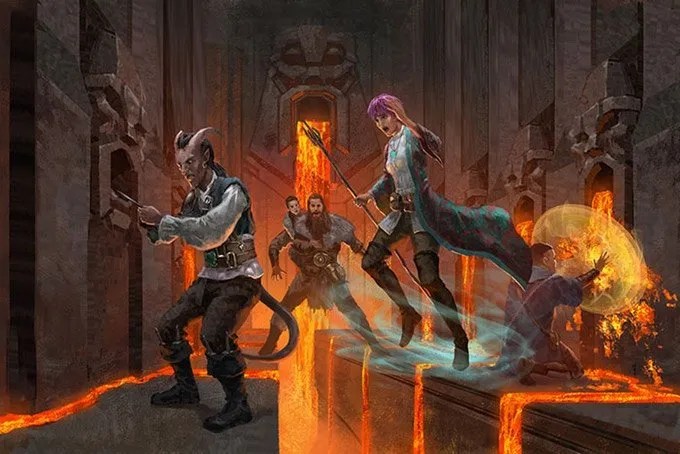
There are a lot of videos and articles about how to make puzzles and traps in Dungeons & Dragons, but something I think we’ve skipped is the question of “Why?” Why are there puzzles and traps in the first place? I don’t mean why is it in the game, which is because we all loved Indiana Jones and watching him solve puzzles and dodging traps is extremely exciting. No, why did previous inhabitants of this dungeon go through all the work of putting in puzzles and traps? And how do we make sure the puzzles and traps echo that fiction?
I also want to state that in my opinion, the majority of the time puzzles and traps should go hand in hand. First you come to a puzzle, and if you don’t finish the puzzle, then you get hit with a trap. There are times where you want just a puzzle, or just a trap, but I see those as the exception, not the rule.
Why Is There a Puzzle and Trap?
To protect *something*. Think of it like a password on your computer. Your password protects the information on your computer, so the puzzle and trap is a password that might protect treasure, secret knowledge, a hidden location, someone’s final resting place, or something else.
So the most basic puzzle is simply a locked door, that you have to unlock with your password. The password can be a physical or magical key, a pattern of inputs, or even an actual spoken word.
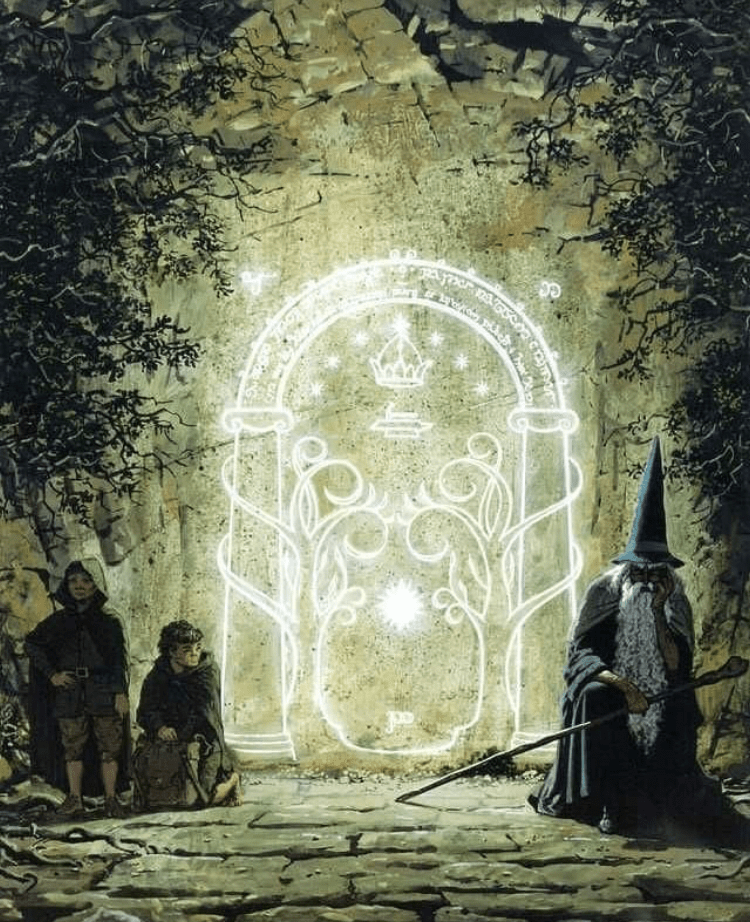
Sometimes you forget your password, we all do, and while it’s out of fashion now, we used to have password “hints” on our computer.

So the puzzle is simply the password hint. The goal of a password hint is to 1) ensure whoever is allowed to continue can remember, and 2) whoever is not allowed to continue cannot figure it out. In high risk situations, the priority might be to definitively keep out anyone who shouldn’t be there, even if it means that some people who are cannot make it in, but that’s not usually the case.
Some people might argue that there are puzzles and traps that NO ONE is supposed to be able to make it through, but if that were the case there wouldn’t be a path in the first place, just a big thick wall. If you disagree, then next time you are playing and come across a tough puzzle, just start hacking through the wall like an archeologist and go around the entire thing. If that’s not your only option, then clearly someone was supposed to make it through.
So now we have a good basis for the puzzle. We will pause on designing the puzzle itself, though, so we can look at the consequential trap.
Traps are the way to deter people that aren’t supposed to enter, proved by their failure to know the password, or solve the puzzle. Sometimes that deterrent is non-lethal, though the downside to that is that it has a tendency to raise questions, which become rumors, which become interest by the wrong parties. So there is a higher likelihood that traps are intended to be lethal, especially if there are multiple levels of puzzle/trap security, that you aren’t intended to survive them all. In D&D, we play characters that are tougher than your average person, so a good measure would be lethal to a Commoner (AC4, HP10, +0 to all saves). That will certainly build up quickly, but prove the original designer’s intent to keep the location a secret.
Now that we know why the puzzles and traps have been made, it is time to make them! There are literally hundreds, if not thousands of puzzles and traps throughout various online guides and books on DMsGuild, who will give you fully fleshed out options better than I can, so let’s find a way to narrow them down.
4 Puzzle and Trap Decisions
Intended Entrants
As mentioned above, who are the people that are meant to make it through? Members of the local thieves guild? Goblins of the Broken Tooth Clan? Members of a secret cabal? Descendants of the dead? Who are the people that should know the password, and maybe forgot?
Environment
Now let’s take a look at the dungeon/area as a whole. Are we underground? Is this a natural area, or man made? How big is the space? What kinds of things might the Intended Entrants be bringing with them? All of these limit what kinds of puzzles and traps would fit, both in the physical space, and thematically.
Maker’s Ability
Who made this puzzle and trap? What is their technological or magical capability? Does the puzzle and trap need to be reset, and will the Intended Entrants have the capability to reset them? How many resources (time and money) would have been devoted to the creation of the puzzle and trap?
Symbolic Significance
Lastly, and this could tie in with the password hint, does the puzzle and trap have symbolism involved that is important to the maker or intended entrants? If the area is related to knights of a certain order, are there statues of said knights in their armor that are interactive with the puzzle and trap?
Don’t Forget!
While it is fun for your players to figure out the password and make it through, or not figure it out and deal with the trap, don’t forget it is also fun to trick the puzzle into thinking you know the password, or disabling the trap entirely. DM’s spend so much time designing, that when our players outthink us, there is a threat of us becoming defensive and denying their alternate solutions. Make sure we don’t put our pride in the way of a good time, and letting our players feel smart. I know you had this whole thing planned, and now they don’t get to see it, but that’s part of the game, and every good DM knows it.
 The Nerdd
2 comments